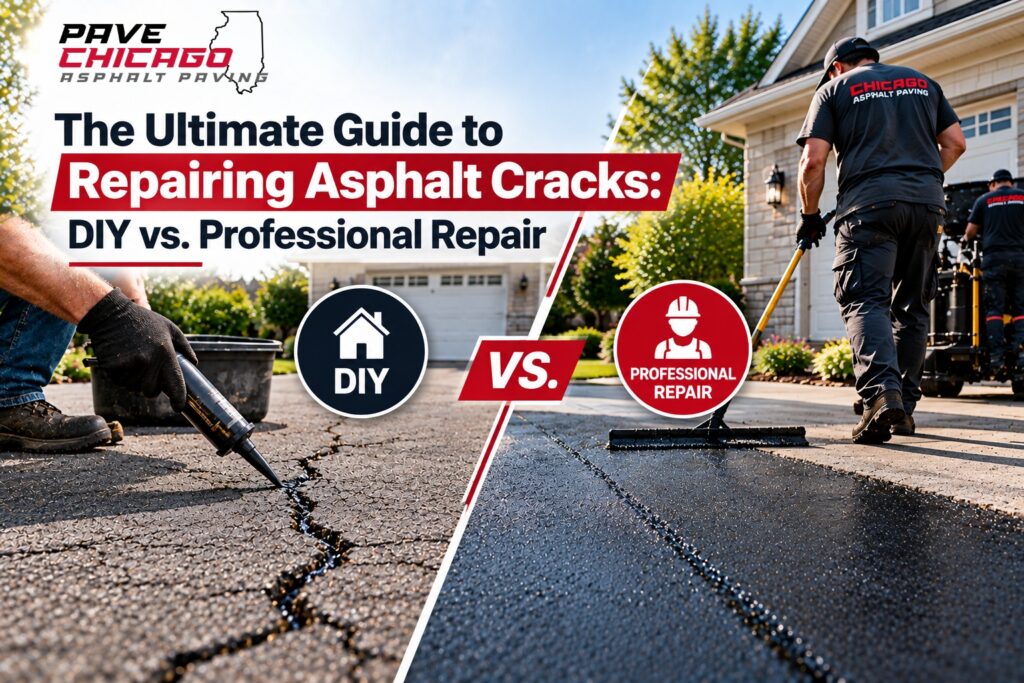
Cracks in asphalt can seem to appear almost overnight. One season your driveway or parking area looks solid; the next, thin lines have spread into networks that collect water, weeds, and debris. Left untreated, those openings can allow moisture to reach deeper pavement layers and contribute to deterioration, especially through repeated freeze-thaw cycles.
Property owners across Chicago and the surrounding suburbs face these challenges because of temperature swings, heavy traffic, moisture, road salt, and snow-removal activity. Understanding the right approach to asphalt crack repair can help manage early deterioration and protect pavement condition. Property owners seeking professional help can turn to Pave Chicago for asphalt repair, resurfacing, and maintenance services.
This guide walks through everything you need to know: why cracks form, how to identify different types, when a do-it-yourself fix makes sense, and when calling experienced professionals delivers better long-term value. You will find clear preparation steps, material guidance, realistic durability expectations, and practical maintenance advice tailored to Midwest conditions. Understanding these details helps homeowners and property managers make informed decisions that save money and extend pavement life.
Why Asphalt Cracks Develop
Asphalt is flexible compared with concrete, but it still responds to temperature, moisture, traffic, and structural stresses. Temperature changes can cause asphalt to expand and contract, while repeated freeze-thaw cycles can increase stress in cracks where moisture is present. Repeated vehicle loading can also contribute to fatigue and cracking, particularly when pavement support or thickness is inadequate. Ultraviolet exposure and oxidation can gradually make asphalt binders harder and less flexible, increasing susceptibility to cracking. Poor drainage, inadequate base support, weak pavement edges, or insufficient pavement thickness can accelerate deterioration.
In the Chicago area, seasonal temperature changes can place additional stress on asphalt pavement. Water entering existing cracks can freeze and expand during cold weather, while repeated freezing and thawing can contribute to widening and deterioration. Road salt, deicing materials, moisture, snow removal, and traffic can also contribute to pavement wear. Snowplow operations can damage already weakened pavement edges or surfaces if equipment contacts deteriorated areas. Understanding these factors can help property owners choose an appropriate repair approach instead of treating every crack the same way.
Other contributing factors can include petroleum-based contaminants, drainage problems, tree-root movement, and concentrated loads from heavy vehicles. These factors do not affect every pavement in the same way, but they can contribute to deterioration when existing pavement or support conditions are already compromised. Even properly constructed asphalt eventually requires maintenance, but timely treatment can help manage suitable surface cracks before deterioration becomes more extensive.
Common Types of Asphalt Cracks
Not every crack requires the same treatment. Recognizing the crack pattern can help guide material selection and determine whether DIY repair is appropriate. Crack appearance alone cannot always identify the underlying cause, so widespread or severe cracking may require professional evaluation.
- Hairline or narrow cracks are small surface openings that may be suitable for an appropriate crack-filling product when the surrounding pavement is sound and the crack is suitable for surface treatment.
- Longitudinal cracks generally run parallel to the pavement centerline or along construction joints. They can be associated with joint-related issues, pavement movement, or underlying support conditions.
- Transverse cracks generally run across the pavement. Temperature-related expansion and contraction can contribute to this type of cracking, particularly in climates with significant seasonal temperature changes.
- Edge cracks develop near the pavement perimeter and can be associated with weak edge support, drainage problems, or deterioration along the pavement boundary.
- Block cracks form interconnected rectangular patterns and are commonly associated with aging, thermal movement, and oxidation of the asphalt binder.
- Alligator or fatigue cracking creates an interconnected pattern resembling an alligator’s skin. It can indicate significant pavement distress associated with repeated loading, inadequate structural support, insufficient pavement thickness, or other underlying problems.
Alligator or fatigue cracking generally should not be treated as a simple surface-crack problem. When this type of cracking is widespread, a professional evaluation can help determine whether localized repair, patching, resurfacing, rehabilitation, or reconstruction is appropriate.
Mapping the location and extent of cracking can provide a clearer picture of the pavement’s condition and help determine whether the problem is localized or widespread.
DIY Asphalt Crack Repair: When It Works and How to Do It Right
Homeowners can successfully handle narrow cracks that have not yet compromised the base. Success depends on thorough preparation, the right materials, proper technique, and patience during curing. Skipping important preparation or application steps can reduce repair performance and increase the likelihood of early failure. Product selection, crack movement, surface condition, weather, and curing conditions can also affect how long a DIY repair remains effective.
Preparation is everything.
Clear vegetation, dirt, loose asphalt, and old filler from the crack and the surrounding surface. Depending on the crack and repair product, a stiff brush, hand tool, compressed air, or another suitable cleaning method may be appropriate. Avoid introducing moisture unless the product instructions specifically allow it, and make sure the surface meets the manufacturer’s preparation requirements before application. Choose weather conditions that meet the repair product manufacturer’s temperature, moisture, and curing requirements, and avoid application when rain or surface moisture could interfere with bonding. Early morning dew or residual dampness from previous rain can easily sabotage the repair if overlooked.
Choosing materials carefully.
For narrow cracks, an asphalt-specific liquid crack filler or pourable sealant may be appropriate when the product matches the crack condition and application requirements. Follow the manufacturer’s instructions for surface preparation, application method, temperature, moisture conditions, and curing time. Product performance can vary with the formulation, crack movement, traffic, weather, and condition of the surrounding pavement.
Crack Filling vs. Crack Sealing
Crack filling and crack sealing are related but not identical treatments. Crack filling is generally used for cracks with relatively little movement, while crack sealing is more appropriate for cracks that experience greater movement and require a more flexible treatment. The right approach depends on crack movement, pavement condition, climate, traffic, crack characteristics, and the treatment specifications. When the pavement has widespread or structurally significant cracking, surface treatment alone may not address the underlying problem.
Application steps for narrow cracks.
Apply the repair material according to the manufacturer’s instructions rather than relying on a single application method for every product. Make sure the crack is properly prepared, the surface conditions meet the product requirements, and the material is applied at the recommended rate and depth.
Work steadily along the crack and avoid leaving gaps, voids, or excess material on the surrounding pavement. Use an appropriate tool to smooth or finish the repair if the product instructions call for it. Allow the repair to cure for the full period specified by the manufacturer before allowing foot or vehicle traffic.
Curing time can vary with the repair material, temperature, moisture, and other site conditions. Protect the repaired area as recommended by the product manufacturer until the material has adequately cured.
Wider cracks and small potholes.
Remove loose material and prepare the damaged area according to the patching material manufacturer’s instructions. If the edges are severely deteriorated or the repair requires cutting into sound pavement, professional evaluation may be more appropriate. Apply the patching material in layers when required by the product or repair method, and compact each layer thoroughly before adding the next. Compact each layer firmly with an appropriate hand tamper or other tool recommended for the patching material. Proper compaction is critical because poorly densified material will settle or ravel under traffic. Finish the patch according to the product or material instructions, including any requirements for final grade and compaction. If the pavement is otherwise suitable for sealcoating, follow the sealcoat manufacturer’s recommendations on whether and when to apply it after crack or patch repairs.
Proper asphalt crack filling can be effective for suitable isolated openings when the surrounding pavement remains sound. If the pavement is otherwise suitable for sealcoating, some property owners may apply a sealcoat after crack or patch repairs, following the sealcoat manufacturer’s recommendations for timing, application rate, coverage, and curing. Realistic expectations matter. A carefully executed DIY repair can remain effective for a meaningful period when the crack is suitable for surface treatment and the surrounding pavement remains structurally sound. Actual service life varies with crack movement, preparation, repair material, traffic, weather, and pavement condition. A surface repair will not restore structural strength if the base has already failed.
On larger or more complex areas, the appropriate repair method and final result depend on pavement condition, preparation, materials, equipment, and the scope of the work. Careful asphalt crack filling on suitable small openings can help manage localized deterioration and may reduce the need for more extensive repair when the surrounding pavement remains sound. Re-inspect repaired spots each spring and fall and touch up as needed to maintain performance. Common DIY mistakes include applying product to damp surfaces, failing to compact wide repairs adequately, using non-flexible fillers, and allowing traffic too soon. Avoiding these pitfalls can improve repair performance and reduce the likelihood of early failure.
When Professional Repair Is the Smarter Choice
Certain conditions push a project beyond typical homeowner capability. Widespread cracking, large or repeatedly opening cracks, soft or sunken areas, repeated patch failures, or surfaces that serve commercial or multi-family traffic usually require professional evaluation. A professional assessment from Pave Chicago can help property owners evaluate pavement conditions where cracking is widespread, traffic demands are higher, or visible damage may extend beyond the surface. Professional evaluation can consider pavement condition, drainage, traffic demands, and whether damage extends below the surface. When conditions require more extensive repair, a contractor may remove failed material, address underlying deficiencies, and place an appropriate asphalt mix based on pavement condition and project requirements. Commercial parking lots, apartment complexes, HOA common areas, and high-traffic residential driveways may require professional evaluation when cracking is widespread, traffic demands are high, or pavement condition suggests that surface treatment alone may not be sufficient.
For property owners seeking asphalt repair and maintenance services, the appropriate repair approach depends on the condition and extent of pavement damage. Professional services may address cracks, potholes, and worn pavement, while resurfacing may be considered when the existing pavement has a stable base, and the deterioration is primarily at the surface level. For more complex pavement problems, the appropriate repair method depends on the severity and extent of deterioration, along with site and pavement conditions. When surface treatment is not sufficient, a professional assessment can help determine whether asphalt crack repair, localized patching, resurfacing, or another approach is appropriate.
Professional work may include controlled material application, appropriate compaction equipment, edge detailing, and repair methods selected for the pavement condition and project requirements. Warranty coverage, when offered, depends on the contractor and project. The long-term value of professional repair depends on pavement condition, repair method, traffic, drainage, and how effectively underlying problems are addressed. Professional work may also allow related pavement or drainage issues to be considered as part of the broader repair plan and can reduce the amount of hands-on work required from the property owner.
DIY vs. Professional Asphalt Crack Repair: Side-by-Side Comparison
| Factor | DIY Repair | Professional Repair |
| Best for | Narrow, isolated cracks on sound pavement | Wide cracks, alligator patterns, and large areas |
| Equipment needed | Basic hand tools, filler, and tamper | Professional equipment selected for the repair method |
| Typical durability | Variable; depends on crack movement, surface preparation, repair material, traffic, and underlying pavement condition | Variable; depends on pavement condition, repair method, preparation, materials, traffic, weather, and underlying pavement condition |
| Cost range | Low material cost | Higher initial cost |
| Time commitment | Varies with crack extent, preparation, application, and curing requirements | Scheduled crew with minimal homeowner effort |
| Risk of early failure | Higher if preparation is incomplete | Depends on pavement condition, preparation, materials, and application quality |
| Appearance | Functional; may show seams or color differences | May provide a more consistent finish, depending on the repair method and existing pavement. |
| Warranty | None | May be available, depending on the contractor and project |
Cost Considerations
DIY asphalt crack repair generally has a lower upfront cost because the homeowner mainly pays for repair materials and any tools that are not already available. The total expense depends on the number and size of cracks, the type of repair material, surface preparation, and whether additional patching is necessary.
Professional repair usually costs more initially because the project may include labor, equipment, surface preparation, material application, and repairs to underlying pavement problems. The appropriate comparison is therefore not simply the lowest upfront price. Consider the condition of the pavement, the extent of the damage, the expected repair needs, and whether the underlying cause can be addressed at the same time.
For an accurate project-specific estimate, a contractor can assess the pavement and determine whether crack treatment, patching, resurfacing, or another repair approach is appropriate.
Prevention and Long-Term Maintenance
Repair is only half the battle. Moisture is one of the most important factors in asphalt deterioration, so ensuring positive drainage away from the surface is essential. Keep gutters and downspouts directed well clear of the pavement and fill any low spots that collect water as soon as they appear. Avoid parking heavy vehicles or equipment in the same location for extended periods, as concentrated loads can accelerate surface fatigue. In winter, use deicing materials according to the manufacturer’s instructions, and avoid practices that unnecessarily damage the pavement surface or edges. Clear snow promptly when practical to reduce prolonged moisture exposure and potential plow-related damage. Inspect the surface carefully each spring after the thaw and again in the fall before winter weather arrives. Address new hairline openings promptly through appropriate asphalt crack sealing when the crack characteristics and pavement condition make sealing suitable, so they do not grow into larger problems during the next freeze cycle.
Sealcoating may be appropriate as part of a broader asphalt maintenance plan when the pavement is in suitable condition, with the timing based on pavement condition, traffic, climate, and the sealcoat manufacturer’s recommendations. Many property owners include asphalt crack sealing during this process to help protect the pavement and address cracks before they allow more moisture to enter. Regular inspections and timely crack sealing, when appropriate for the pavement condition and crack characteristics, can help limit moisture intrusion and manage localized deterioration.
Additional helpful habits include keeping the surface clean of debris and leaves that can retain moisture, avoiding sharp tools or heavy equipment that can gouge the pavement, and keeping simple records of repairs and maintenance for future reference.
Choosing the Right Path for Your Property
For property owners who need professional help, Pave Chicago offers asphalt crack repair, resurfacing, and pavement maintenance services. The key is honest assessment of the damage and realistic expectations about what each approach can achieve under Chicago-area conditions. If you are unsure whether a crack network signals surface wear or deeper base issues, a professional inspection can help remove the guesswork. Addressing pavement problems while they are still manageable may help avoid more extensive repair or replacement costs later. Factors such as driveway age, traffic volume, drainage quality, and previous repair history all influence the appropriate repair approach for a given property.
The appropriate service depends on the condition of the existing pavement, the extent of deterioration, drainage, traffic demands, and the property’s specific repair needs. Taking action early—whether with a well-executed DIY repair or a professional solution—can help protect the appearance and condition of your pavement. A well-maintained surface can support safety, curb appeal, and long-term pavement performance while potentially reducing the need for more extensive intervention later.
Assess your cracks this season, choose the approach that matches their severity and your property’s needs, and maintain the pavement according to its condition and the requirements of the repair materials used.