Chicago winters test every outdoor surface. Repeated freeze-thaw cycles, heavy road salt, snowplow abrasion, and intense summer UV radiation steadily break down unprotected asphalt. A driveway that looks solid in October can develop fine cracks by spring, and untreated surface deterioration may progress into more extensive cracking, potholes, or other pavement damage over time. More extensive repairs can become costly and disruptive when pavement deterioration is allowed to progress.
Many property owners ask the same practical question: is applying a protective coating actually worth the effort and expense, or is it simply another maintenance expense that delivers limited return? Properly timed asphalt sealcoating can be a cost-effective preventive-maintenance measure for pavement that remains structurally sound. When applied under the right conditions and on an appropriate schedule, it can slow oxidation, reduce water and chemical penetration, and help maintain the pavement’s appearance and serviceability. For Chicago-area property owners, Pave Chicago can provide guidance on whether this preventive approach is appropriate when the pavement remains structurally sound and exposed to demanding seasonal conditions.
This guide examines the real benefits, the recommended frequency for the Chicago climate, realistic pricing, ideal timing, application best practices, and common pitfalls so you can make an informed decision for your property.
How Asphalt Deteriorates and Why Protection Matters
Asphalt consists of aggregate bound by a petroleum-based binder. Over time, ultraviolet light oxidizes that binder, causing it to lose flexibility and become brittle. Once the surface loses elasticity, microscopic cracks form. Water enters those openings, freezes, and expands—especially during repeated freeze-thaw cycles common in northern Illinois winters. De-icing chemicals and vehicle fluids accelerate the breakdown. The result can include progressive cracking, raveling, and other forms of pavement deterioration when underlying problems are not addressed.
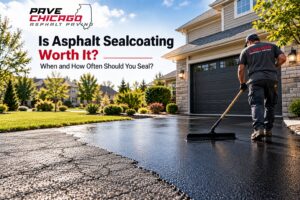
A quality sealcoat forms a thin, continuous barrier across the pavement. It fills surface voids, reduces permeability, shields the binder from UV exposure, and limits the penetration of water and chemicals. The coating can also restore a darker, more uniform appearance, which may improve the overall look of a driveway or parking area. Sealcoating is a preventive treatment, not a structural repair. Existing cracks must be filled and any base problems addressed before the protective layer is applied. When the pavement remains in good to fair condition, however, the barrier can help slow surface deterioration and protect the asphalt from ongoing weather-related exposure.
Regular preventive maintenance can help slow surface deterioration and support longer pavement service life when the underlying asphalt remains structurally sound. Sealcoating is most appropriate as a preventive treatment for pavement with limited surface deterioration, rather than as a solution for structural damage or significant base failure.
Is Asphalt Sealcoating Worth the Investment?
The financial case is strongest when preventive maintenance can help avoid or delay more extensive repairs. Professional sealcoating generally involves a much smaller scope of work than full pavement replacement. Sealcoating prices vary by pavement size, surface condition, preparation requirements, access, materials, and local contractor rates. A site-specific estimate is more reliable than applying a single per-square-foot price to every project. Larger or more deteriorated surfaces cost more, while smaller or well-prepared areas cost less.
Asphalt replacement costs substantially more than routine sealcoating because the project may involve pavement removal, excavation, base correction, new asphalt, drainage work, labor, and disposal. The total cost varies significantly by site conditions and project scope. Regular preventive maintenance can help slow surface deterioration and may delay the need for more extensive pavement repairs or replacement when the underlying asphalt remains structurally sound.
Key Benefits of Asphalt Sealcoating
- Helps protect the pavement surface from moisture-related deterioration and weathering
- Provides added resistance to oil, gasoline, and certain de-icing chemicals
- Improves the overall appearance of weathered asphalt
- Helps seal small surface voids and minor surface deterioration
- Supports preventive maintenance when the pavement remains structurally sound
Commercial properties amplify both the risk and the reward. Larger parking areas multiply the expense of delayed maintenance, making a disciplined protective schedule especially valuable.
When comparing sealcoating with more extensive pavement work, property owners should look beyond the initial price. Sealcoating is primarily a preventive surface treatment, while asphalt repair, resurfacing, or replacement may be appropriate when deterioration is more extensive. The right option depends on the condition of the existing pavement, the extent of damage, and whether the underlying base remains stable. Comparing the scope of work and expected maintenance needs can help property owners determine whether sealcoating provides reasonable value for their property.
Sealcoating projects can vary in preparation, repair needs, materials, and application requirements. The following table illustrates how service scope may differ by project.
Asphalt Sealcoating Service Levels
| Service Level | What It Typically Includes | Best For |
| Basic | Standard surface cleaning, basic preparation, and application of a suitable sealer | Pavement in relatively good condition with limited preparation needs |
| Standard | More thorough cleaning and surface preparation, crack treatment where needed, and consistent sealer application | Most residential driveways and regularly maintained asphalt surfaces |
| Premium | Detailed surface preparation, targeted repairs, higher-quality materials, careful application, and greater attention to site-specific conditions | Larger, heavily used, weather-exposed, or more demanding pavement |
Several factors determine the final cost of asphalt sealcoating, including pavement size, surface condition, preparation requirements, site access, materials, and the scope of work. Rather than relying on a fixed price range, property owners should compare what each service includes and whether the preparation and materials match the pavement’s condition. A detailed site assessment provides a more reliable basis for comparing asphalt sealcoating cost and service quality.
How Often Should You Sealcoat Asphalt in Northern Illinois
Climate is an important factor in sealcoating schedules, but the appropriate timing also depends on pavement condition, traffic, weather exposure, drainage, and previous maintenance. In the Chicago area, a general sealcoating interval may fall within a few years, but there is no universal schedule for every driveway or parking area. According to guidance from the Asphalt Institute, well-designed, low-traffic asphalt may not need its first sealcoat for roughly two to five years, depending on climate and the quality of the original pavement work. The right timing depends on pavement condition, traffic, weather exposure, drainage, and the quality of previous maintenance. Heavy traffic, greater weather exposure, poor drainage, and previous pavement condition can all affect how soon the surface requires attention. Determining how often you should sealcoat asphalt depends on a careful look at local conditions rather than a one-size-fits-all rule.
Key variables that influence the exact interval include traffic volume, vehicle weight, and direct sunlight. Drainage performance, salt and de-icer use, and the quality of previous maintenance also affect the timing. New asphalt requires a curing period before the first protective layer. New asphalt should generally be allowed to cure and age before sealcoating. The appropriate waiting period can vary with the pavement, materials, weather, and product requirements, so the sealer manufacturer’s recommendations should be followed. Applying the coating too early can interfere with adhesion and long-term performance.
After the initial treatment, inspect the pavement periodically and schedule the next application based on its condition, traffic, weather exposure, drainage, and the sealer manufacturer’s recommendations. Applying a new layer every year is generally not advisable. Repeated applications without considering the pavement condition and existing coating can lead to unnecessary buildup and may contribute to peeling, surface defects, or other performance problems. The objective is steady protection without unnecessary layers. Many homeowners find that reviewing how often you should sealcoat asphalt with a local professional leads to a more accurate long-term plan.
Ideal Timing and Weather Requirements for the Chicago Area
The practical application window in northern Illinois typically runs from late spring through early fall, when temperatures and pavement conditions are suitable for proper curing. Suitable application conditions depend on the sealer, temperature, humidity, pavement condition, and weather forecast. Follow the manufacturer’s instructions for temperature, drying, and curing requirements, and avoid application when rain or freezing conditions could interfere with proper curing. Applications should be scheduled when the pavement and forecast meet the sealer manufacturer’s requirements and allow adequate curing before freezing conditions.
Avoid application when rain, freezing temperatures, or other weather conditions could interfere with proper curing, or when the pavement remains wet, contaminated, or otherwise unsuitable for application. Spring work can be appropriate after winter damage has been assessed and the pavement has dried thoroughly. Manufacturers’ guidelines and local experience both emphasize that proper curing conditions are important for adhesion and durability.
Clear Signs That Your Surface Needs Attention
You do not need to wait for a fixed anniversary date. Practical indicators include fading from deep black to dull gray, the appearance of fine surface cracks or a rough texture, minor pitting, and oil stains that have begun to soften the asphalt. When these conditions appear, arrange an evaluation. Small cracks should be cleaned and filled with appropriate material before any protective coating is applied. Extensive alligator cracking, multiple potholes, or evidence of base failure may require asphalt repair before sealcoating. A surface treatment alone cannot correct structural problems.
As a general rule, sealcoating is best suited to pavement with sound underlying structure and limited surface deterioration. Extensive alligator cracking, widespread potholes, significant drainage problems, or base failure may require asphalt repair, resurfacing, or full replacement instead of—or before—sealcoating. A professional pavement assessment can help determine which treatment is appropriate for the condition of the existing asphalt.
Understanding Pricing Factors in Detail
Several elements determine the final price. Surface size is the primary driver, followed by current condition, the amount of cleaning and crack repair required, site access for equipment, and the type of sealer selected. In the Chicago market, project pricing can vary significantly based on pavement size, surface condition, preparation requirements, site access, materials, and the scope of work. Higher-solids or polymer-modified formulations may offer performance advantages depending on the product, pavement condition, and application. Reviewing the complete asphalt sealcoating cost for your specific site allows better comparison of options.
A transparent written estimate should list the full scope of work, materials, preparation steps, and any warranty offered. Comparing total value rather than the lowest unit price helps avoid incomplete preparation that shortens service life. For precise figures tailored to a specific property, a site assessment remains the most reliable approach. Property owners who understand typical asphalt sealcoating cost ranges are better positioned to evaluate quotes fairly.
Step-by-Step Application Process for Reliable Results
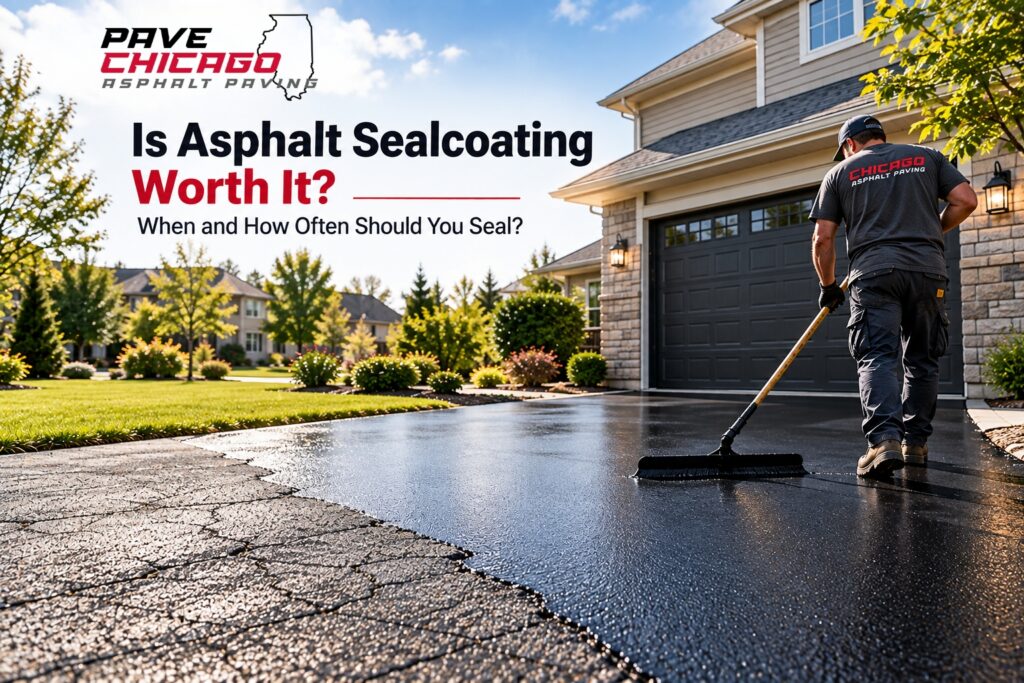
Effective work follows a disciplined sequence. The surface is first cleaned thoroughly to remove dirt, vegetation, and loose material. Oil spots receive specialized treatment so the new coating can bond properly. Cracks are cleaned and filled. The sealer is then applied in a thin, even layer using spray or squeegee equipment, with the application rate adjusted to the pavement surface and product requirements.
After application, keep foot and vehicle traffic off the pavement for the period recommended by the sealer manufacturer or contractor. Cooler temperatures, higher humidity, and other site conditions may require additional curing time. Curing time varies with the sealer, application conditions, temperature, humidity, and traffic. Follow the manufacturer’s instructions for the recommended curing period before returning the pavement to normal use. During this period, sharp turns and heavy loads are best avoided to prevent marking.
Professional crews typically use commercial-grade materials, appropriate application rates, and equipment suited to the project. Homeowners may reduce labor costs by handling very small projects themselves, but uneven coverage or unsuitable products can lead to shorter service life and earlier reapplication. For property owners considering professional sealcoating, Pave Chicago can help assess local pavement conditions and determine an appropriate approach for residential and commercial surfaces.
Material Choices and Local Considerations
Modern asphalt-emulsion sealers are commonly used for residential and commercial sealcoating. These products can provide surface protection while avoiding some of the environmental concerns associated with coal-tar formulations. EPA research has found substantially higher PAH levels associated with coal-tar sealcoat than with asphalt-emulsion sealcoat and has identified asphalt-emulsion and acrylic sealants as alternatives to coal-tar-based products. Some municipalities and jurisdictions have restricted or banned coal-tar-based sealcoating because of concerns about polycyclic aromatic hydrocarbons.
Polymer-modified or higher-solids sealers may offer different performance characteristics depending on the formulation, pavement condition, application method, traffic level, and weather exposure. Rather than choosing a sealer based only on price, property owners should consider whether the product is appropriate for the pavement condition and the manufacturer’s application requirements.
Common Mistakes That Reduce Performance
Several errors commonly shorten the life of a protective layer. Applying material over unfilled cracks or unresolved structural damage allows water to continue entering the pavement. Sealing too soon after new asphalt installation can trap residual oils and weaken adhesion. Working outside the recommended temperature range produces incomplete curing or flash drying. Using excessive material creates a thick film that may peel or remain soft. Selecting low-solids or inappropriate products for the climate further reduces effectiveness. Addressing these issues at the planning stage produces more reliable results.
Aftercare and Ongoing Maintenance
Once the coating has cured, routine care extends its benefits. Keep the surface free of debris, address oil spills promptly, and avoid aggressive metal snow-removal tools that can scar the protective layer. Periodic visual inspections in spring and fall help identify new cracks early so they can be filled before the next protective cycle. Combining timely crack repair with scheduled surface protection creates a practical maintenance rhythm that can support longer pavement service life.
Making the Right Decision for Your Property
Protective treatment can be a worthwhile investment when the pavement remains structurally sound and the goal is to extend its service life through preventive maintenance. In the Chicago climate, the right sealcoating schedule depends on pavement condition, traffic, weather exposure, drainage, and previous maintenance rather than a fixed calendar interval. Working with an experienced local provider such as Pave Chicago can help property owners assess these factors and determine whether sealcoating is appropriate for their pavement. When applied at the right time, sealcoating can help protect the surface, maintain its appearance, and reduce the need for more extensive maintenance.
If your driveway or parking area shows early signs of wear or deterioration, a professional evaluation can help determine whether sealcoating is appropriate for the pavement. Experienced local contractors understand the specific demands of Illinois weather and can recommend the right timing, materials, and preparation for each site. Proper asphalt sealcoating remains one of the simplest ways to safeguard pavement performance over the long term.
The team can assess your pavement and provide a clear, detailed estimate. Addressing surface deterioration early can be less expensive and less disruptive than allowing damage to progress to more extensive repairs. A well-timed application keeps asphalt functional, attractive, and ready for another season of Chicago weather.